Spending 3 days in Milan is enough to get to know the city and a bit more. If you are the typical traveller who likes to make the most of their trips, this guide to seeing, without missing a thing, is for you. As well as what to see in Milan in 3 days, we’ve included a special recommendation near Milan to visit before the end of your trip.
To enjoy the Lombard capital with total freedom, many travellers opt for their own vehicle. If this is your case, we recommend taking a look at this guide on where to park for free in Milan, so that the car isn’t a headache while you explore the centre.
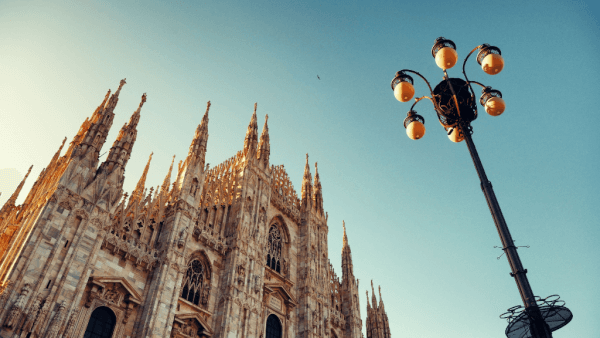
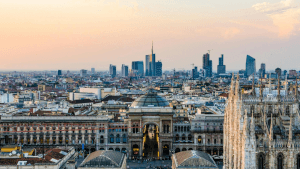
The Duomo is what the Cathedral is called in Italian. This must be your first stop. It’s located in one of the Lombard capital’s most famous squares, which curiously bears the same name. Although its interior is impressive, what is really worth visiting are its terraces, where you can walk among marble pinnacles and gargoyles. Mind you, a bit of advice: buy your ticket in advance, as you can find yourself in a long queue and it is the best way to guarantee entry.
Just as you leave the Duomo, you’ll come across the Galleria Vittorio Emanuele II, known as 'Milan’s Drawing Room'. It isn’t your average shopping centre; it’s a 19th-century masterpiece built of iron and glass. Here, you’ll find haute couture boutiques, cafes, and ice cream parlours.
If you’re a bit superstitious, there’s one thing you can't miss: look for the mosaic of the bull on the floor. Tradition has it that if you want to return to Milan or simply have a bit of luck, you must place your right heel on the animal’s genitals and spin around three times without your foot slipping.
Leaving the Galleria from the side opposite the Duomo, you’ll find the Teatro alla Scala. At first glance, its facade might seem a bit plain or even understated compared to the Cathedral, but don’t let that fool you; give it a chance and discover its interior: gold, red velvet, and incredible acoustics.
Additionally, you can visit its museum, where you’ll see more than just ancient instruments; if you’re lucky enough that there aren't any rehearsals on, you can peek out from one of the boxes to look down at the stalls from above. And if you enjoy the opera or want a different kind of experience, you can still watch performances there today.
Continuing the tour and just a few steps away from the shops, we reach Piazza Mercanti. It’s a place that offers a massive contrast: you go from modern avenues and luxury shops to a medieval setting that takes you straight back to the 13th century.
In the past, this was Milan’s administrative and judicial heart, which you’ll notice from the elegance of buildings like the Palazzo della Ragione. But the most fun thing about this square is its acoustic 'secret': if you go up to the columns and whisper something towards the opposite pillar, the person standing there will hear you perfectly, as if you were talking on an invisible phone, similar to what happens with the famous columns in Bologna.
If you’ve ever wondered where Milan’s reputation as the capital of style comes from, it’s here, at the crossroads of streets like Via Montenapoleone and Via della Spiga. The most important thing to know is that you don’t need to be breaking the bank to enjoy the area; a stroll around here is more than enough to see another side of the city.
The quintessential bohemian quarter of Milan. This is home to the famous Pinacoteca di Brera, one of the most important museums in the country, but even if you don’t go in to see the paintings, have a peek at its inner courtyard. Brera is the perfect spot for a 'pit stop' to have a coffee (or a Spritz, if you fancy one) at one of its little terraces. It has that modern 'Dolce Vita' vibe that will make you want to move in right then and there.
Just a few minutes from the main tourist area, we reach San Maurizio al Monastero Maggiore, a place that often goes unnoticed by many travellers, but I promise you it is an absolute gem. From the outside, it looks like just another church, discreet and unassuming, but as soon as you step through the door, prepare to be amazed: it’s the 'Sistine Chapel of Milan'.
Directly after leaving the San Maurizio area, you’ll see the silhouette of the Castello Sforzesco. This isn’t your typical fairytale fortress; it’s a robust, red-brick castle that served as the residence for the Dukes of Milan and even featured the hand of Leonardo da Vinci himself in its decoration.
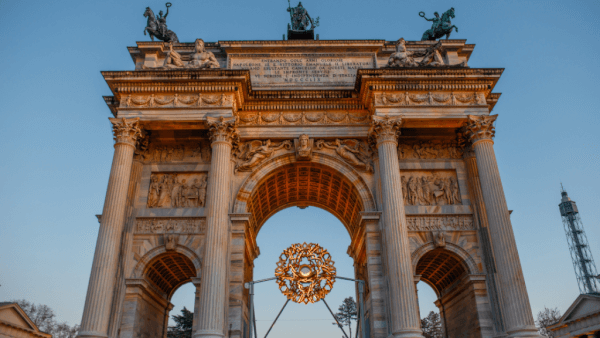
And that’s where Parco Sempione appears, the favourite spot for Milanese locals to switch off. It’s a huge English-style garden where you’ll see people having picnics or simply resting their legs after so much walking. If you walk through the middle of the park, you’ll reach the Arco della Pace, a spectacular triumphal arch that marks the end of this green space.
There is no better place to end your first day in Milan than the Torre Branca, located on the edge of Sempione Park. Forget your typical old stone towers; this is a 108-metre-high steel structure designed by the architect Giò Ponti in the 1930s. It looks like a Milanese version of the 'Eiffel Tower' but with a much more industrial and modern feel.
From the top, the 360-degree views are simply spectacular: you’ll have the geometric design of the park at your feet, the imposing silhouette of the Castle, and, in the distance, the contrast of the skyscrapers in the CityLife district.
After a first day getting to know the city centre’s highlights, we’ve prepared a route through the Lombard capital’s most artistic spots for the second day.
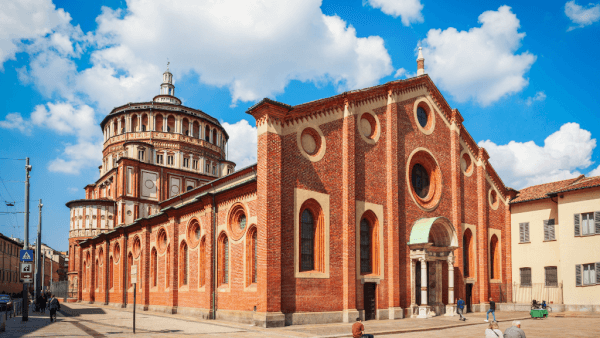
Start the day on a high note by visiting one of the most famous works of art in the world: Leonardo da Vinci’s The Last Supper. It is located in the refectory of this Dominican convent. Top tip: tickets sell out months in advance, so if you don’t have one yet, try to get yours as soon as possible.
A short walk away, we reach one of the oldest and most beloved churches for the Milanese. Saint Ambrose is the city's patron saint, and his basilica is a gem of Lombard Romanesque architecture. Fun fact: look for the 'Devil's Column' in the square, which has two holes that, according to legend, were made by Satan's horns when he crashed into it.
This is one of the few standing remnants of Roman Milan. These 16 marble columns have become the favourite meeting point for young people before heading out for the night. It’s the perfect spot to sit for a moment, take in the atmosphere, and see how ancient history blends with urban art and the surrounding graffiti.
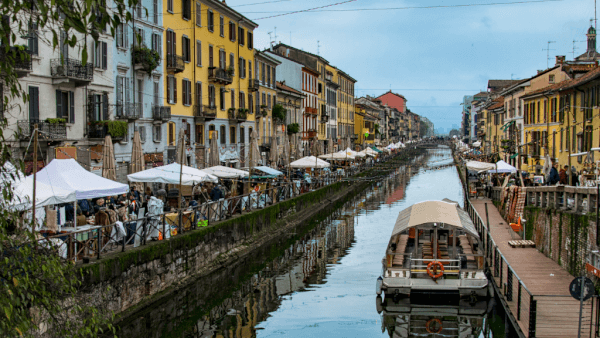
Keep walking until you reach the canals. Yes, Milan has canals! The Naviglio Grande and the Naviglio Pavese. It’s an incredibly charming area, full of iron bridges. It is the sacred spot to partake in the ritual of the Milanese aperitivo: you order a drink and get access to a food buffet. Watching the sunset here is an absolute must.
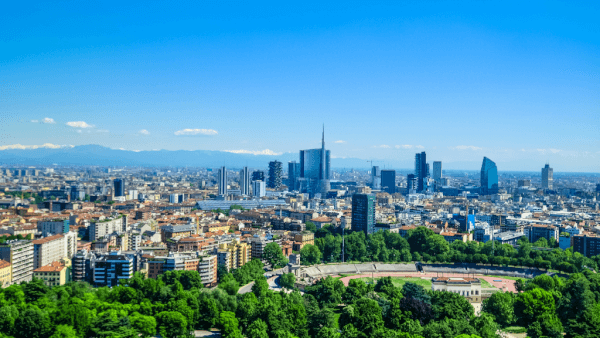
Continue your walk and take a leap into the future to see 21st-century Milan in Piazza Gae Aulenti, a spectacle of modern architecture with its fountains and high-rise buildings. Here, you will see the famous Bosco Verticale (Vertical Forest), two buildings covered in trees and plants that have become the symbol of sustainability and the city's contemporary design.
It might sound strange to recommend a cemetery, but believe me, this is a genuine open-air museum. It is so vast and contains such impressive sculptures and tombs that you’ll forget where you are. It is the final resting place of Italy's most illustrious figures, and strolling through its avenues is like taking a tour through the history of art over the last two centuries.
For the perfect ending to your trip, there is no better plan than spending your final day in the beautiful Bergamo, a city divided into two levels. Our logistical recommendation to make the most of your time is to hire a car with DoYouItaly; this way, you can move around with total freedom, keep your luggage with you, and, once you’ve finished your visit, drive straight to the airport (which is just a stone's throw away) to drop it off before your flight.
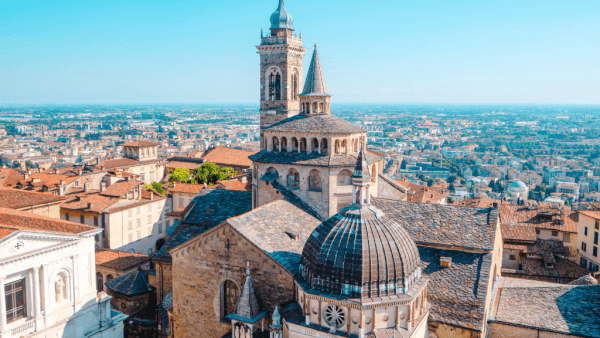
Once in Bergamo, head straight for the Citta Alta, the medieval historic centre surrounded by impressive Venetian walls, which are a World Heritage site. You can ride the legendary funicular to arrive in Piazza Vecchia, the heart of the city, where you’ll find the Palazzo della Ragione and the Campanone tower. Don’t miss the Basilica of Santa Maria Maggiore and the Colleoni Chapel, whose marble facades are among the most beautiful things you will see in Italy. Before you leave, wander down Via Gombito to try polenta e osei (the local sweet treat) or have lunch at a local trattoria. It is a city with a much calmer atmosphere than Milan and the ideal stop before saying 'arrivederci' to Italy.
If you're planning a trip to Alghero and getting around by car, there's probably one question on your mind before you even arrive in Sardinia: where can you park in Alghero? The answer really depends on what you want to do. Finding somewhere to leave the car for a few ...
Do you only have one day to visit Turin? You can get to know its main sights if you organise your route well and focus on the most important highlights. In this guide you will find what to see in Turin in one day, with a practical route through Piazza ...
Some local ingredients are a staple of regional cooking, while others become a symbol of the place itself. The Alba white truffle easily fits into both categories. Every autumn, travellers head to Alba and the surrounding villages of the Langhe region. They come for the unmistakable aroma and flavour of ...
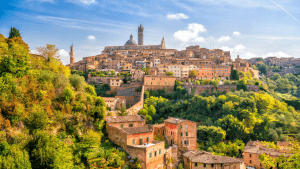
Driving into Siena is fantastic… right up until you have to park. Between narrow streets, restricted traffic zones, and car parks that quickly get expensive if you're staying for a few hours, finding a spot can feel like a nightmare. But don't worry: there are still ways to park for ...
If your flight lands at Milan Bergamo-Orio al Serio Airport and your final destination is Milan, you are probably wondering about the best way to reach the city centre. Although it is known as Milan Bergamo Airport, it is actually located right next to Bergamo, roughly 50 kilometres from Milan. ...
Visiting Venice is all about wandering along canals, crossing bridges without quite knowing where they lead, and stumbling upon charming squares that were never on your itinerary. But there is another classic experience that every trip needs: stopping for a proper Italian gelato. And no, not all ice cream in ...
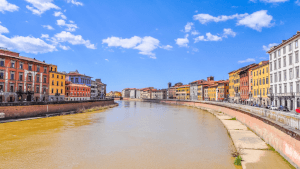
If you're planning a trip to Pisa, you probably know it’s a great city to explore in a single day, you can easily see the Piazza dei Miracoli, the Leaning Tower, and the main sights in a few hours. If you're currently putting your itinerary together, check out our blog ...
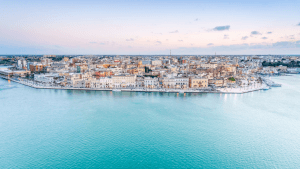
Situated on the Adriatic coast in the Italian region of Puglia, Brindisi is a city shaped by its history, its port, and its deep connection to the Mediterranean. Although it is sometimes slightly overshadowed by better-known destinations in the region, such as Bari, Lecce, Ostuni, it is well worth including ...
With over 2,700 years of history, Palermo is a city full of character, packed with lively streets, traditional open-air markets, churches, UNESCO World Heritage palaces, and some of the island's best beaches just minutes from the city centre. If you are planning a trip and wondering what to see in ...
When planning a trip, there are two absolute essentials: knowing which sights to visit and, of course, discovering the local food. We all want to know where to go for lunch, where to have dinner, and which local specialities we simply can't miss. Italy makes this very easy. Its incredible ...
If there’s one thing that surprises you the moment you arrive in Cagliari, it’s how quickly you can swap the bustle of the city for the pure relaxation of its crystal-clear beaches. The Sardinian capital has that special charm where, in a matter of minutes, you can leave the history ...
Only have one day to explore Milan? Don't worry: even though the city has plenty to offer, a well-planned 24 hours is more than enough to see its most famous spots. Milan is known as the capital of fashion, design, and business, but it’s also home to a rich history ...