-
Home
-
Rome
-
A Weekend in Rome: 3 Days in the Italian Capital
A Weekend in Rome: 3 Days in the Italian Capital
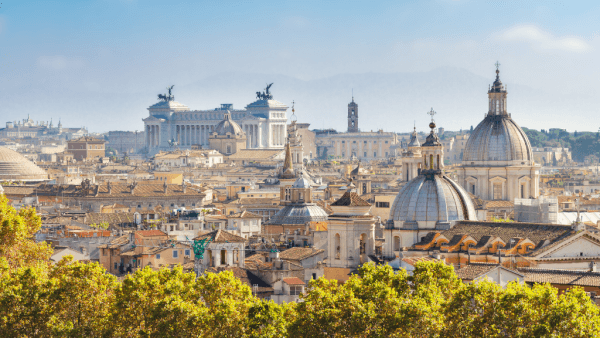
Few cities in the world pack in as much history as Rome. The Italian capital is one of the most visited places in Europe, if not the most. At every building, street, or monument, you’ll find yourself stopping to take in the beauty and learn about its past.
Although you could easily spend weeks exploring Rome, it is also perfect for a short break. With a bit of planning, it’s possible to see many of its most famous landmarks, wander through its well-known neighbourhoods, and enjoy the incredible food in just a few days.
If you’re planning a trip, this itinerary will help you figure out what to see in Rome in 3 days, mixing the must-see spots with relaxed walks through its historic streets. To get around easily from the airport, we recommend booking a car hire with DoYouItaly. It’ll let you make the most of every moment without having to rely on public transport.
Once you’ve made it into central Rome from the airport, there’s no better way to start the day than the way the locals do: with a simple breakfast. Head to a café and order a classic cappuccino with a cornetto, the Italian version of a croissant. It’s the perfect way to fuel up before starting your first day of exploring.
With your batteries recharged, start your route at one of the most impressive monuments in the world: the Colosseum. This amphitheatre, the ultimate symbol of the Roman Empire, is a must-see to really get a feel for the city’s history. Very close by, you can stop at the Domus Aurea, the palace built by Emperor Nero. You can go inside if you book a ticket (just remember to do it a few days in advance).
From here, carry on towards the Victor Emmanuel II Monument in Piazza Venezia, one of the most recognisable spots in central Rome. Following the route, you’ll reach the historic Circus Maximus, where the famous chariot races used to take place.
Next, head up to the Campidoglio, one of the seven hills of Rome, where you’ll get some of the best views over the historic centre. Walking back down, you can head into a quieter area that’s full of character: the Portico of Octavia and the nearby Theatre of Marcellus, which looks a bit like a smaller version of the Colosseum.
The next stop is one of the city's more curious spots: the famous Bocca della Verità (the Mouth of Truth). Legend has it that if you're a liar, you'll lose your hand if you put it in the mouth.
From here, you can pass back by the Circus Maximus and carry on to one of the best spots of the day: the Giardino degli Aranci (the Orange Garden), a peaceful garden with one of the finest sunset views in Rome.
To finish the day, cross the river into the Trastevere neighbourhood and visit the Basilica of Santa Maria in Trastevere, one of the most beautiful churches in the city. It’s the perfect place to wrap up the day and, if you fancy it, stay for dinner at one of the local restaurants.
The second day in Rome starts with one of the most essential parts of the whole trip: Vatican City. It’s the smallest independent state in the world and a major hub for art and history.
Get an early start at St. Peter’s Basilica, one of the most impressive churches on the planet. The interior is honestly spectacular, both for its sheer size and the wealth of art inside. Here, you’ll see one of the world's most famous works: Michelangelo’s Pietà, a marble sculpture known for its incredible detail. It’s also worth stopping to take in Gian Lorenzo Bernini’s massive bronze baldachin, which sits right under the dome.
Afterwards, head over to the Vatican Museums, a must-see on any 3-day Rome itinerary. This complex holds one of the most important art collections in the world, with thousands of pieces on display. Some of the standouts include the classical sculptures of Laocoön and His Sons and the Apollo Belvedere, two key examples of Greco-Roman art. The tour ends at the stunning Sistine Chapel, where you can look up at Michelangelo’s famous frescoes, including the iconic Last Judgment.
After a busy morning of culture, head out of the Vatican and walk towards one of Rome’s most iconic landmarks: Castel Sant'Angelo. Originally built as a mausoleum for Emperor Hadrian, it’s now a fortress offering some of the best panoramic views of the River Tiber and the Vatican itself. The walk over the nearby Ponte Sant'Angelo, with all its angel statues, is one of the nicest strolls in the city.
The route continues towards the elegant Ara Pacis Museum, which houses the Altar of Augustan Peace, a key piece of Roman art that symbolises the prosperity of the Empire.
Just a short walk away is the lively Piazza del Popolo, one of Rome’s main squares, dominated by an Egyptian obelisk and surrounded by historic churches and buildings. From here, you can start heading up towards one of the best places to end your day.
The final stop is Villa Borghese, Rome’s huge central park. This green space is perfect for getting away from the city buzz and wandering among the gardens, fountains, and sculptures. While you're in the park, you can't miss the Pincio Terrace, which is easily one of the best spots to watch the sunset in Rome.
From here, you’ll get an unforgettable view over Piazza del Popolo and the city rooftops—a perfect way to wrap up the second day of your Rome trip.
The last day in Rome is perfect for discovering the more elegant and grand side of the city, taking in some of its most famous squares and enjoying the charm of the historic centre.
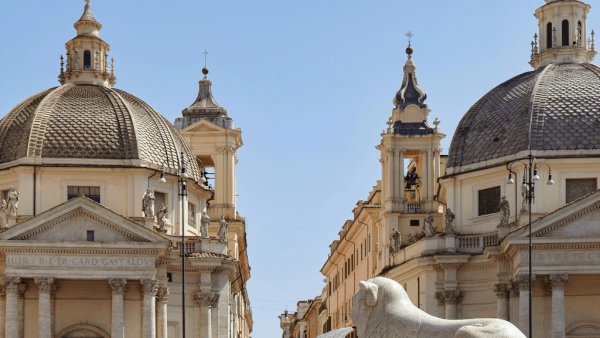
You can start the day back at Piazza del Popolo, one of the main gateways into Rome. This huge square, with its towering Egyptian obelisk, is the ideal starting point. From here, you can see the 'twin churches' that frame the entrance to Via del Corso, one of the city’s main high streets.
From Piazza del Popolo, head towards the elegant Spanish Steps, one of the most iconic spots in Rome. The famous stairway leads up to the Trinità dei Monti church, which gives you a great view looking back down over the square.
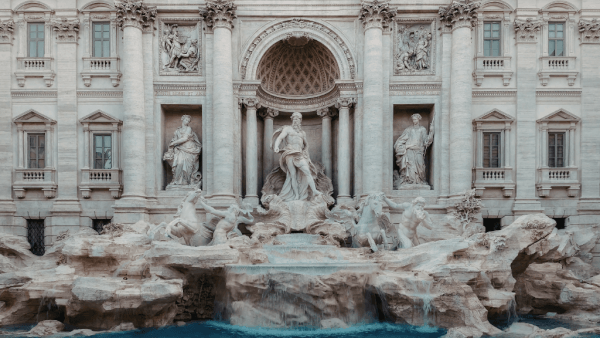
The next stop is the spectacular Trevi Fountain, probably the most famous fountain in the world. Don't forget to follow the tradition and toss a coin into the water to make sure you'll return to Rome one day.
Continuing your walk, you’ll come to the historic Piazza Colonna, home to the Column of Marcus Aurelius, a monument built to mark the Roman Emperor’s victories. Very close by is the Palazzo Montecitorio, the seat of the Italian Parliament and a building of huge political and historical importance.
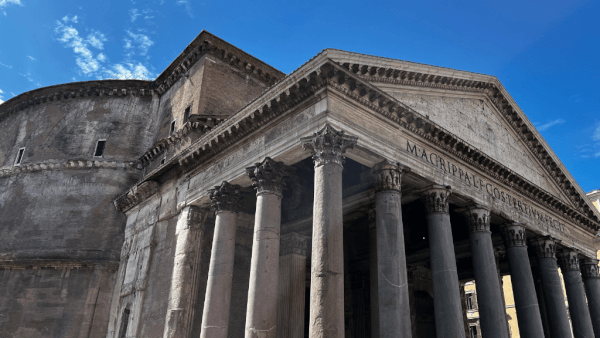
The route then takes you to one of the most fascinating spots in Rome: the Pantheon. This ancient Roman temple, which was later turned into a church, is one of the best-preserved buildings from antiquity. Its massive dome and the open hole in the centre (the oculus) create a unique light effect inside.
Just a few minutes’ walk away is the lively Piazza Navona, one of the prettiest squares in the city. Here, you can see the spectacular Fountain of the Four Rivers by Gian Lorenzo Bernini and enjoy the atmosphere, which is always full of street artists and outdoor terraces.
To finish the trip, there’s nowhere better than Campo de' Fiori, one of Rome’s most vibrant and authentic squares. During the day, it hosts a traditional market, and as evening falls, it comes alive with bars and restaurants. It’s the perfect place to say goodbye to the city over a final Italian dinner.
To make sure you don't waste a single minute of your trip to Rome, the easiest option is to book a car hire with DoYouItaly. This way, you can get from the airport to the city centre quickly and also use the car to explore spots a bit further out. Rome is full of restaurants and spots that are well worth discovering, and having a hire car means you can reach them without any hassle, enjoying the city at your own pace.